
Hail is the most argued-about damage in Greater Houston roofing. Some storms leave a roof that needs replacing. Others leave dented gutters and nothing on the shingles worth fixing. Knowing which one you have keeps you from filing a claim you do not need, and from missing one you do.
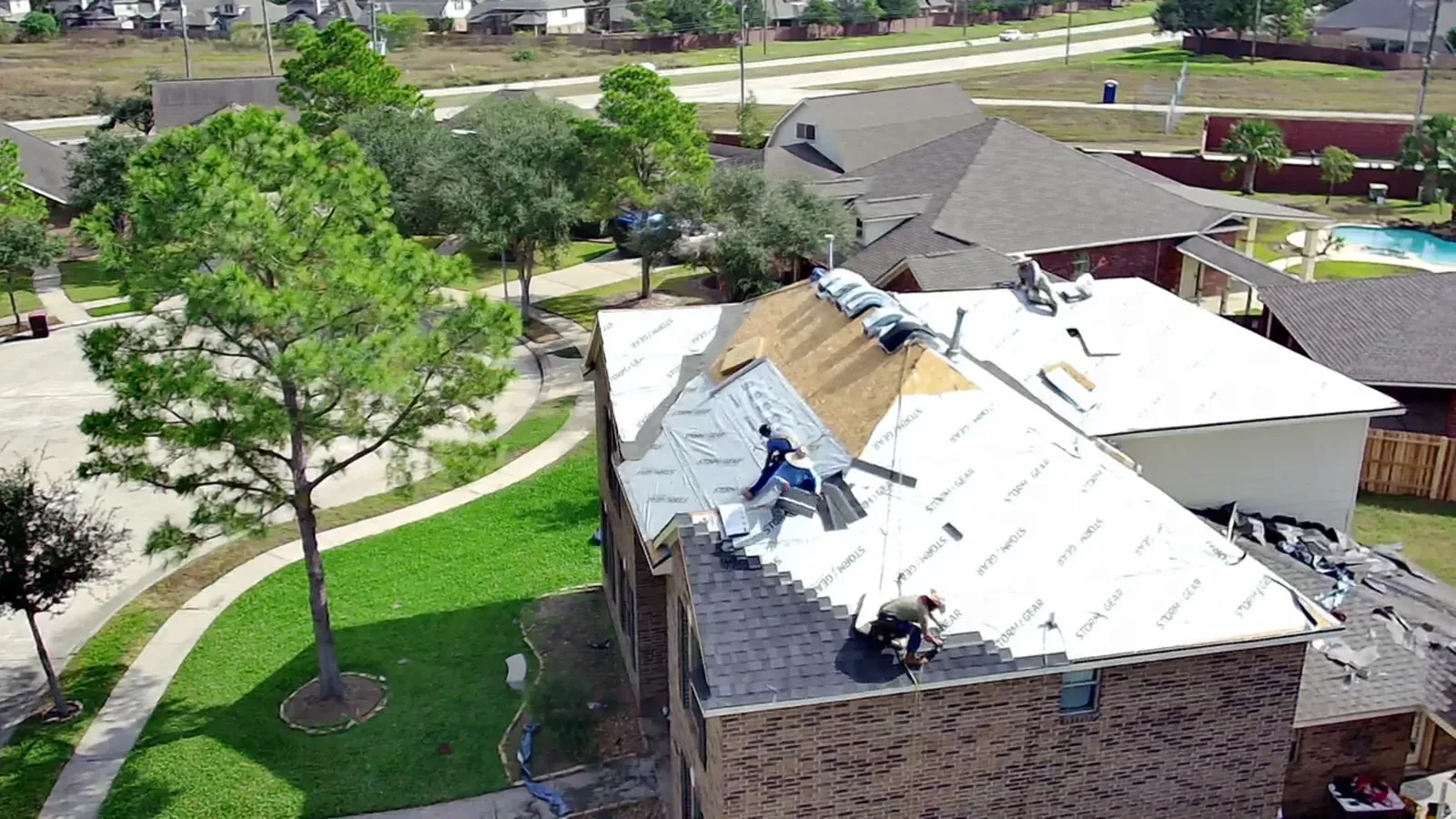
How a hailstone hits a shingle
An asphalt shingle is a fiberglass mat soaked in asphalt and topped with ceramic-coated granules. The granules shield the asphalt from sunlight, which is what slowly breaks it down. When a hailstone strikes, it can knock granules loose, crush the asphalt underneath, or in a hard hit fracture the mat itself. From the driveway you will usually see none of it, because the marks are small and scattered.
Stone size, density and wind decide how much harm a storm does. A small stone falling straight down rarely hurts a sound roof. Larger stones driven sideways by a gust do far more, and they hit the slopes facing the storm much harder than the sheltered ones. That is why the front of a house can be bruised while the back slope looks untouched.
Roof age plays in as well. Fresh shingles are flexible and shrug off hits that would crack a brittle old roof. The same storm can leave one house on your street needing work and the house next door perfectly fine, so a neighbor’s claim tells you to look, and it tells you nothing about what you will find.
Signs of functional damage
Functional damage is damage that shortens the life of the roof or lets water in. The most common sign is a bruise: a soft spot that gives under thumb pressure, often with granules missing in a rough circle. Over the next year or two the exposed asphalt dries out in the sun and the spot splits open, which is when the leak finally shows up inside.
A fractured mat is worse. Lift the edge of a bruised shingle and look at the back, and a crack running through it means water has a path. Punctured shingles, broken seal strips and split ridge caps all count too. Real hail marks land randomly across a slope with no pattern, which is one of the simplest ways to separate them from ordinary wear.
Inspectors usually chalk a sample square on each slope and count the hits inside it. Your carrier’s adjuster will often do something similar. A few bruises per slope may be repairable by replacing individual shingles. Heavy bruising across every slope that faced the storm points toward replacement.
Marks that look bad and mean little
Dented gutters, dinged downspouts and a pockmarked vent cap prove that hail fell. They do not prove the shingles were hurt. Soft aluminum dents at a fraction of the force it takes to fracture a shingle, so a gutter full of dimples can sit under a roof that is in fine health.
Blistering is often mistaken for hail. It shows up as small raised bubbles that pop and leave shallow pits, and it comes from trapped moisture or a hot attic baking the shingle from below. Foot-traffic scuffs, nail pops lifting a shingle from underneath, and old granule wear along a gutter line are all aging, and none of them came from a storm.
Some policies treat cosmetic hail marks differently from functional damage, and some exclude them entirely. Read yours before you call. If the only marks are on metal and the shingles test sound, filing may put a claim on your record and pay you nothing.
Why hail damage hides from the ground
Hail damage on shingles is small. A bruise the size of a quarter does not show from the yard, and it often does not show in a drone photo taken from forty feet up. The dependable way to find it is to get on the roof, look across the surface in low, raking light, and press each suspicious spot.
That takes someone who knows how to walk a roof without causing the very damage they are hunting for. Boots scuff granules, and stepping on brittle shingles on a hot afternoon can crack them. On steep roofs we work in harnesses and move deliberately, and we would rather spend an extra half hour than leave fresh scuffs that confuse the next inspector.
If you want to check for yourself, stay on the ground and look for hints. Fresh granules piling up at the bottom of a downspout after a storm, dents on the storm-facing side of metal vents, and shingle fragments in the yard are all reasons to call someone up the ladder.
Houston hail season and what follows it
Hail in Greater Houston mostly arrives in spring, when cold fronts run into warm Gulf air. A strong line can drop stones along a narrow track several miles long and leave the next subdivision over completely untouched. Comparing notes with neighbors is how many homeowners first learn they should have someone look.
The weeks after a big storm bring a rush of door knockers, many from out of state. We wrote a separate post on the questions to ask them. For this one, the short version is that an honest hail inspection takes time, comes with photos, and ends with a clear answer about functional damage, whatever that answer turns out to be.
Summer adds its own wear on top. A bruise that looks minor in April can crack open after three months of July sun beating on exposed asphalt. If an inspection after a spring storm finds borderline damage, a second look in early fall is worth scheduling, and it costs you nothing to ask.
Deciding whether to file a claim
A claim makes sense when there is functional damage to the roof covering, enough to justify repair or replacement, and the cost of the fix clearly exceeds your deductible. Many Texas homeowners carry a separate wind and hail deductible figured as a percentage of the home’s insured value, so find the actual dollar figure on your declarations page before deciding anything.
When the damage is borderline, a contractor’s photos help you think it through. You can call your carrier, ask how a claim would affect your policy, and decide afterward. Some homeowners pay for a small repair themselves and save the claim for a storm that does real harm.
If you do file, try to be home for the adjuster’s visit and ask for a copy of the report. Share any photos you already have. The adjuster decides coverage. A contractor can point to damage, and nothing more, so anyone who promises that your claim will be approved is selling you something they cannot deliver.
Repair or replace after hail
Scattered bruises on a younger roof can sometimes be handled by replacing the damaged shingles one at a time, provided a close match exists. On an older roof, prying out hail-struck shingles tends to crack the brittle ones around them, and a small repair grows into a large one. At that point a replacement is usually the better use of the money.
Hail damages more than shingles. Check vent caps, pipe boots, skylight frames, gutters, window screens and the paint on wood trim. Some of those may belong on the same claim. Others are quick fixes that are easy to forget once the roof is done, so write them down while the storm is fresh.
If a replacement is coming, it is the right moment to ask about impact-resistant shingles. Another post on this blog covers what the Class 4 rating means and the questions worth putting to your carrier before you choose one.
Hail on a roof that was already tired
Hail on an old roof raises a question few homeowners want to hear. If the shingles were already brittle, curled and bare in spots before the storm, an adjuster may decide that some of what you see is age and wear. Policies that pay less on older roofs make that line matter even more, so it helps to know your roof’s condition before a storm arrives.
That is one more reason to keep dated photos and an inspection report on file. A roof documented in decent shape last fall is far easier to discuss after a spring storm than one nobody has looked at in ten years. Without a record, the conversation comes down to your memory against an adjuster’s reading of a worn surface.
Sometimes the honest answer is that the roof was due anyway. If the hail damage is minor and the roof is near the end of its life, you may decide to replace it on your own schedule and keep your claim history clean. That choice belongs to you, with the facts laid out on the table, and we will not lean on you either way.
Keep records after every storm
Keep a simple file for the house: the date of each significant storm, a few photos of the roof from the ground, attic photos, and any inspection reports. It takes ten minutes after a storm, and it pays off later when a claim, a home sale or a question about old damage comes up.
Carriers sometimes question whether damage came from the most recent storm or an earlier one. Dated photos settle that faster than anyone’s memory. A report that found your roof sound after one storm also becomes the baseline for the next, which makes new damage easier to prove.
If hail has fallen on your street and you want someone to look, call (832) 364-6271. We go up, take the photos, and tell you if you have damage worth fixing, cosmetic marks worth ignoring, or a roof that came through fine.
What to check after a hailstorm
- Granules piled at the bottom of downspouts or washed onto the driveway
- Dents on the storm-facing side of vent caps, gutters and the AC unit
- Shingle pieces or torn tabs lying in the yard
- New stains on ceilings or on the attic decking
- The wind and hail deductible on your declarations page, as an actual dollar figure
- Dated photos of the roof and attic taken before anyone climbs up
- Window screens, skylights and painted trim for hail marks of their own
Questions
How big does hail have to be to damage a shingle roof?
There is no single cutoff, because density, wind and the age of the roof all matter. As a rough guide, stones around an inch across start causing functional damage on typical shingles, and older roofs suffer from smaller ones. The only reliable answer comes from inspecting the roof itself.
Can hail damage cause a leak right away?
Sometimes, when a stone punctures a shingle or cracks a skylight. More often the leak shows up months later, after summer sun dries out a bruise until it splits. That delay is why an inspection soon after the storm is worth having even when the ceilings look fine.
Does a dent in my gutter mean my roof was damaged?
No. It means hail fell. Aluminum gutters dent far more easily than shingles fracture, so dented metal over a healthy roof is common. Use the dents as a reason to have the shingles checked, and let the shingles decide the answer.
How long do I have to report hail damage?
Each policy sets its own deadline, and most expect prompt notice. Read your policy or call your carrier soon after a storm, even if you have not decided to file. Waiting a year makes it much harder to tie the damage to a specific storm.
Will a hail claim raise my premium?
That depends on your carrier and your policy, and we cannot answer it for them. Ask your agent or carrier directly before you file. Knowing the answer helps you decide whether a borderline claim is worth making.
Leland or Geoff walks every job before anything gets decided. Book a visit, call (832) 364-6271, or look through the gallery first.