
Home Renovation for a House Whose Layout Already Works
Most houses we walk through don’t need a single wall moved. They need twenty-year-old carpet gone, builder fixtures replaced and a coat of paint that isn’t beige, and that job goes faster because the structure, plumbing and wiring all stay where they are.
Veteran BuiltCypress, Texas
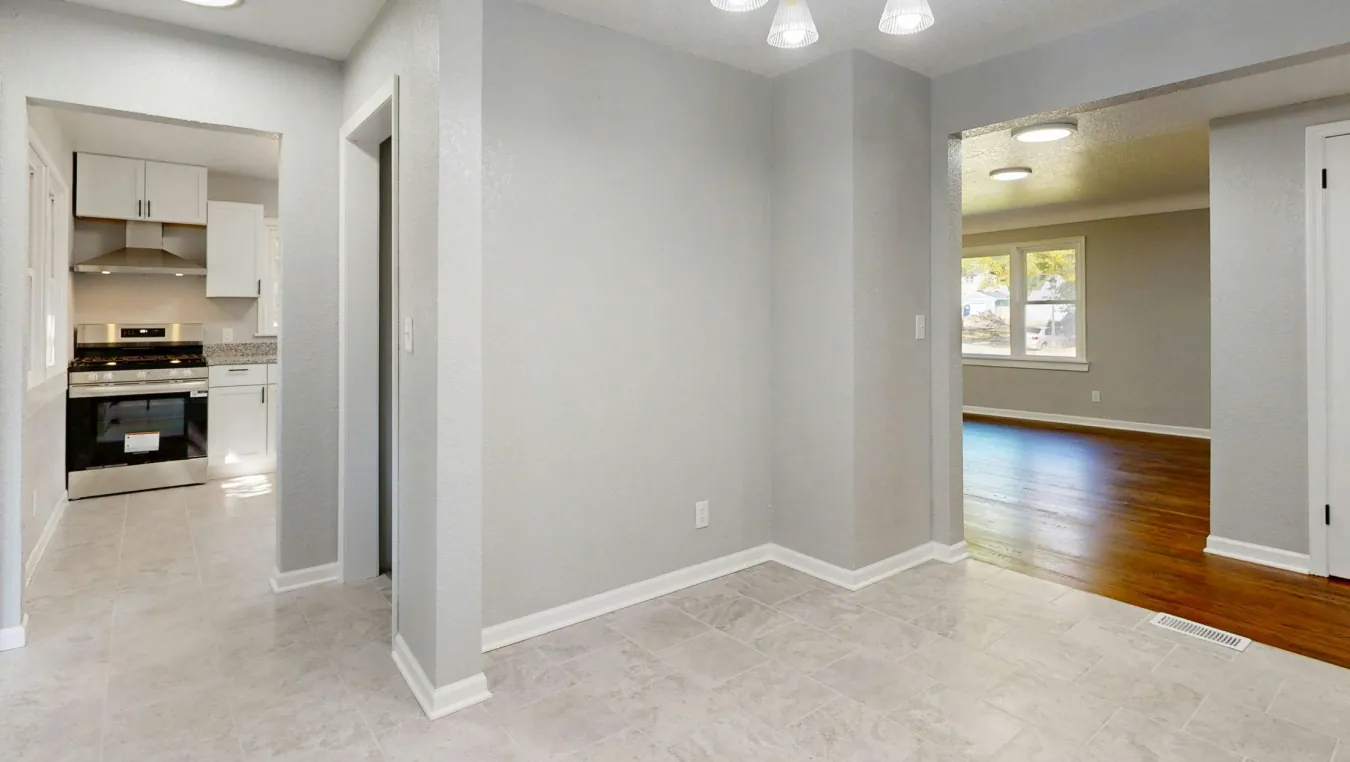
A renovation keeps the footprint. Every wall stays put, every drain stays where it is, and the work is the surfaces and fixtures you touch every day: flooring, interior doors and hardware, baseboard and casing, paint, light fixtures, plumbing trim, and often the cabinets or counters in place. Because nothing structural changes, most renovation work needs no engineering, and the permit question comes down to whether electrical or plumbing work is part of it. We tell you which items need one and which don’t.
Flooring is usually the biggest line. In a house on a slab, the concrete has to be flat before tile or plank goes down, so we grind the high spots and fill the low ones instead of letting a new floor rock at the joints. Plank vinyl and porcelain tile both hold up to humidity and pets better than laminate, which swells at the edges if water sits on it. One floor running through the main living areas, with no thresholds between rooms, does more to make a house feel new than almost anything else on the list.
Order matters. Ceilings and walls get painted before new floors go in, doors and trim get set after flooring so the gaps come out right, and light fixtures and switches get swapped while the painters are still around to touch up. We sequence the house so you can keep living in it, usually one zone at a time, with a dust wall between the work and the rooms you’re using. Interior work rarely needs HOA approval, though some communities have rules about a dumpster in the driveway.
Most homes around Houston sit on a slab, so moving a sink or a toilet means cutting concrete, and that changes the price and the timeline. We say that up front. We also check for the things that hide behind drywall here: old water damage, termite trails and attic ductwork that has been crushed.
If you keep saying the kitchen is in the wrong place or the house feels chopped up, new finishes won’t fix that, and a remodel that moves walls is the honest answer.
When home renovation makes sense
The honest version, including the cases where you should spend the money somewhere else.
- You like where the rooms are and how they connect, and the complaint is the finishes.
- Several rooms need the same work, such as flooring and paint, and doing them together saves you three rounds of contractors.
- You’re settling in for the next decade, or getting ready to list, and the bones of the house are sound.
And when it does not
- If there’s a water stain on a ceiling or a soft spot beside a toilet, find and fix the leak first, because new paint or flooring over it only hides the bill for later.
- If one room is the whole problem, a single-room renovation beats a whole-house scope, and we’d quote just that room.
How we run it
- I
Room list
We walk the house and write down, room by room, what stays and what goes, so the scope is a list you can read.
- II
Selections
You pick flooring, paint colors, fixtures and hardware before we start, since one backordered faucet can stall the whole schedule.
- III
Prep and paint
Furniture moves, floors get protected or pulled, the slab gets leveled where it needs it, and walls and ceilings get painted.
- IV
Floors, trim and fixtures
New flooring goes down, then doors, baseboard and casing, then fixtures and hardware, and we finish with a room-by-room walk.
What we ask before we price it
- What is not working about the room the way it is now?
- Are there finishes you already have in mind, or should we bring samples?
- Has the plumbing under the slab ever been repaired?
- Is there a date you are working toward, like a move-in or a family event?
- Which finishes are you set on, and which are you open about?
What is the difference between renovating and remodeling?
A renovation refreshes what’s there and keeps the floor plan. A remodel changes the layout: walls move, plumbing relocates, rooms change size. Renovations usually run shorter and need fewer permits.
Can we stay in the house during a renovation?
Usually, yes. We work in zones, keep dust walls up, and leave you a working kitchen and bathroom at the end of each day unless those rooms are in the scope.
Should the flooring or the paint come first?
Paint first. Painters drip and ladders scuff. New flooring goes in after the walls and ceilings are done, and baseboard goes on top of the new floor so the edge is covered cleanly.
Will new flooring work on our slab?
Almost always, after prep. Slabs in this area often have high and low spots or old adhesive, and those get ground or filled first. If we find a crack that’s still moving, you hear about it before we cover it.
Do we need a permit for a renovation?
Paint and flooring don’t. Replacing a water heater, adding circuits or rewiring fixtures usually do. We list which items in your scope need one and handle that paperwork.
Can we do it in pieces to fit a budget?
Yes. We rank the list with you so the money goes first to what you notice daily, and the rest can follow later without undoing earlier work. Acorn Finance is available if you’d rather do it all at once.
Who you are hiring
We are a service-disabled veteran-owned company based in Cypress, verified by the Texas Veterans Commission. The person who writes your scope is the person you call if something is not right.
Google reviewers have given us 5.0 across 19 reviews, and the word that keeps coming up is honest. We would rather talk you out of a job than sell you one you do not need.
Military families and first responders take 10% off, and financing is available through Acorn Finance with a no-obligation prequalification. Ask about either when you call.