
Asphalt shingles rarely fail all at once. They wear out a little every summer, shedding the grit that shields them from the sun until the mat underneath starts drying and cracking. The trick for a homeowner is telling a roof that is finished everywhere from one that took a beating in a single spot. A few things you can check yourself, from the ground and the gutters, will tell you most of the answer before anyone comes out.
Start at the bottom of the downspout
The grit on a shingle is crushed stone pressed into the asphalt, and it is what keeps the sun from cooking the shingle. As a roof ages, that grit loosens and washes down the slope with every rain. Look at the splash block or the ground right under a downspout after a storm. A little dark sand there is normal on any roof. A thick bed of it, piling up rain after rain, means the shingles are losing their protection fast.
If you can reach the gutter safely from a ladder at the eave, scoop a handful out and look at it. Brand new roofs shed loose grit in their first season, so a shower of granules off a roof that went on last year means something different from the same pile off a roof that has been up a long time. Dig out your closing papers or old receipts for the year the current roof went on. That one number matters more than any single sign you will see.
Bald patches, curl and cracked tabs
From across the street, a worn three-tab roof starts to look blotchy. Darker patches show where the grit is gone and bare asphalt is showing through, and they tend to appear first on the slopes facing south and west, which take the hardest afternoon sun. The edges of individual tabs may curl up at the corners or cup down in the middle. Either shape means the shingle has dried out and shrunk, and the next good wind has an edge to catch.
Cracks come last. A three-tab shingle has two slots cut into it, and as the material stiffens, cracks start running up from those slots toward the nail line. Once you can see them from the ground, there are many more you cannot. A roof showing curl, bald spots and cracks spread across every slope is past the point where patching helps, and an honest roofer will say so plainly instead of selling you a repair that buys a season.
One bad corner or the whole roof
Sometimes the wear is uneven. A slope under a big shade tree can stay damp and grow moss while the rest of the roof looks fine. A section near a dryer vent or a chimney can wear faster than the field around it. A single slope that blew off in a storm may sit next to three slopes with plenty of life left in them. Those are repair conversations, and a section can often be replaced without touching the rest of the house.
The catch is matching. Shingle colors change from year to year, and new shingles beside weathered ones never look quite the same, so a patch on the front slope will show from the street. When the wear is spread across every slope, asphalt shingle replacement on a Beasley house puts every face of the roof back on the same clock. That is a decision you make with the photos in front of you, on nobody’s say-so but your own.
What should be new instead of reused
A replacement is the one chance to renew the small parts that leak first. Ask any roofer you talk to which of these get replaced and which get reused: the pipe boots around plumbing vents, the drip edge along the eaves, the attic vents, and the flashing where the roof meets a wall. Rubber pipe boots dry out and crack in Gulf Coast sun the same way shingles do, and an old boot left under new shingles is a leak waiting for a date.
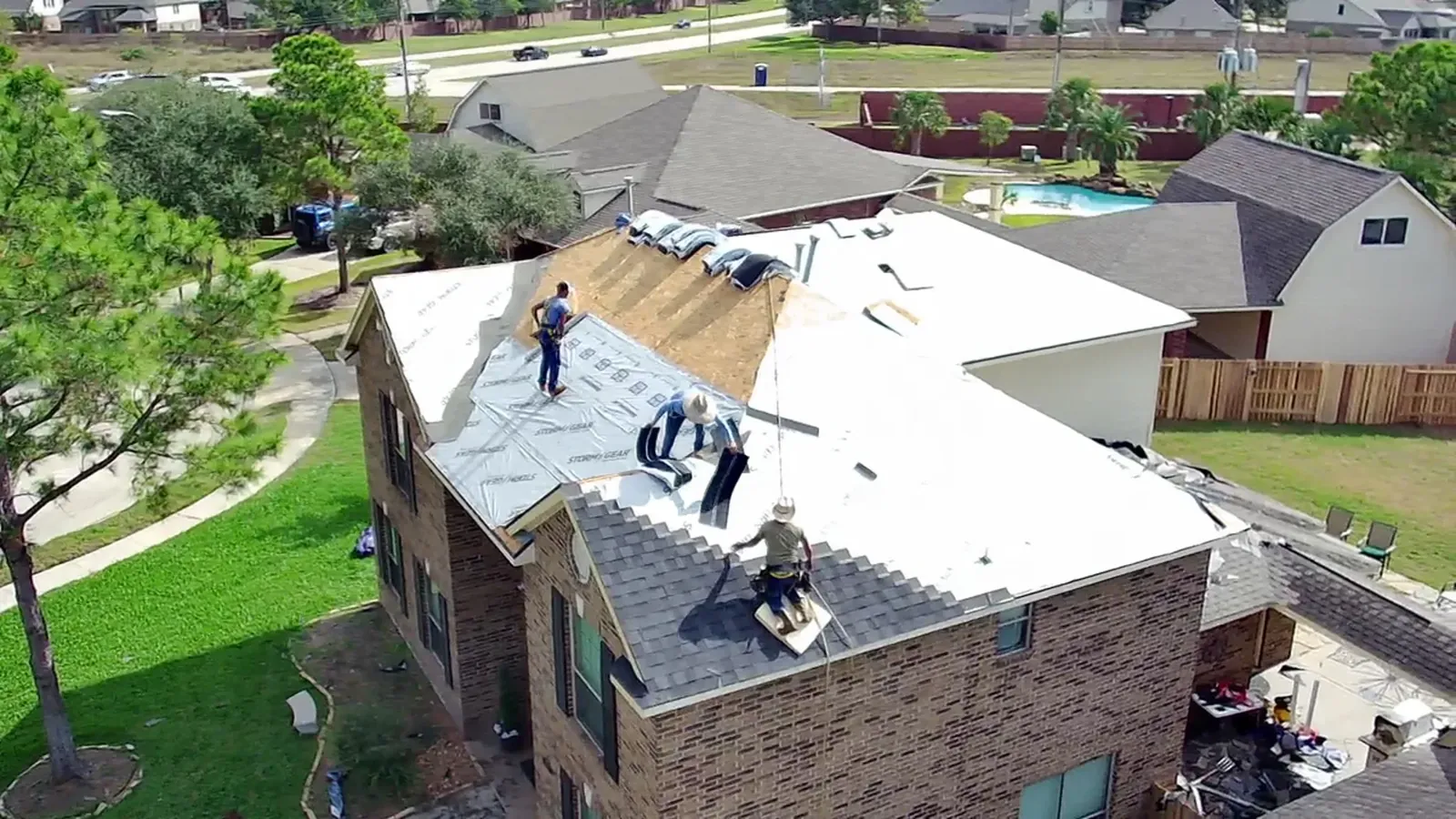
Ask about the decking too. Once the old shingles and felt come off, the plywood underneath is bare for the first time in years, and any sheet that has gone soft or started coming apart in layers should come out right then. Settle in writing, before anything is ordered, how bad sheets get dealt with, so nobody argues about it while the roof is open. Fresh underlayment then goes over the whole deck, and these days that is usually a synthetic sheet rather than old felt.
Check the attic from the inside
Some of the best evidence about a tired roof is under it. On a bright afternoon, take a flashlight into the attic and turn it off once you are up there. Pinpoints of daylight along the nail lines, or a glow at the edge of a vent, mean water has a way in the next time it rains hard. Look at the underside of the decking too. Dark rings and stained patches are old leaks, even if the ceiling below never showed one.
Then use your nose. A musty, damp smell in an attic that should be dry and hot points to moisture that is getting in or not getting out. Note where the stains sit compared to the vents, the chimney and any valleys, and take a few photos. When we come out to look at the roof, those pictures tell us where to spend extra time on the slopes above, and they often settle whether one area or the whole roof is the real problem.
Check these before you call anyone
- Look under each downspout after a rain for a thick bed of dark shingle grit
- Find the year the current roof went on in your closing papers or old receipts
- Compare the south and west slopes to the north side for bald, blotchy patches
- Look for tab corners curling up or thin cracks running up from the slots
- Ask which pipe boots, vents and edge metal get replaced instead of reused
Questions
Why do the shingles near the gutters look worse than the rest?
Water collects and moves fastest at the lower edge of each slope, so the bottom courses lose grit and curl before the rest of the roof does. Gutters that back up make it worse by holding water against the edge. Worn eaves alone can sometimes be repaired, and we will say so if that is all it is.
Is grit in my gutters always a bad sign?
No. A roof sheds loose granules early in its life, and every roof drops a little after a hard rain. What matters is the amount and the age of the roof. A steady heap coming off a roof that has been up many years, along with dark bald patches on the slopes, means the shingles are wearing through to the mat.
Do I have to replace the whole roof if only one slope is worn?
Not always. If one slope wore faster because of shade, a vent or a storm, that section can sometimes be replaced by itself. The trade-off is color, since new shingles rarely match weathered ones exactly. If the other slopes are close behind anyway, doing it all at once usually makes more sense, and we will say which case yours is.
A veteran owner sees it before any price does. Book a visit, call (832) 364-6271, or look through the gallery first.